Record $25K Builder Credits Cut Monthly Payments
Homebuyers can apply record 25,000 dollar builder credits to mortgage buydown programs that lower rates and ease monthly payments on new homes.
Loading...
Homebuyers can apply record 25,000 dollar builder credits to mortgage buydown programs that lower rates and ease monthly payments on new homes.
A 2-1 buydown lowers interest rates for the first two years of a mortgage, delivering meaningful payment relief while the buyer adjusts to ownership costs. Sellers or builders fund the temporary reduction, giving purchasers immediate savings and time to plan for future rate adjustments.
Builder-backed 2% buydowns temporarily lower mortgage rates on new homes. This incentive helps buyers manage early payments while builders maintain sales momentum.
DSCR loans enable investors to qualify for rental property financing using property cash flow instead of traditional income documentation. This guide covers qualification criteria, application steps, costs, and practical preparation strategies.
A 2-1 buydown lowers mortgage payments for the first two years. Sellers or builders often cover the cost, giving buyers early cash flow relief while they qualify at the full note rate.
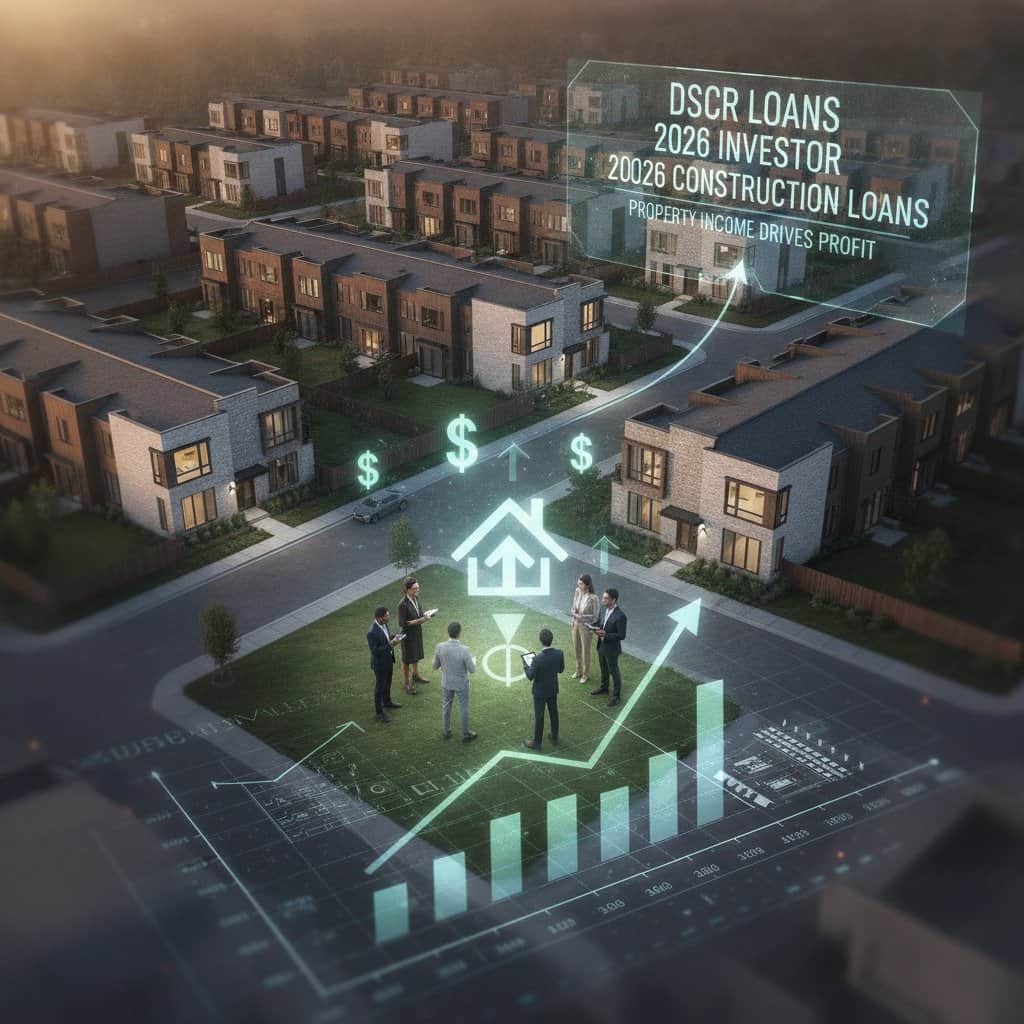
DSCR loans enable builders and self-employed professionals to finance projects using property income rather than personal tax returns. This approach provides flexibility for construction financing, rental conversions, and portfolio growth while reducing documentation requirements.
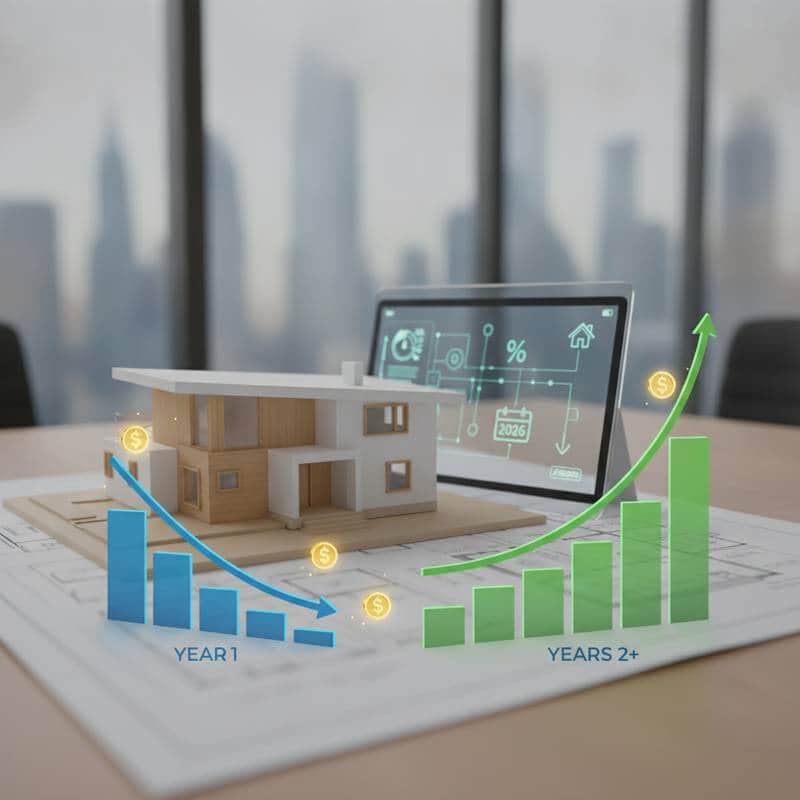
A 2-1 mortgage rate buydown reduces the interest rate by two points in year one and one point in year two. This builder incentive can deliver roughly $40K in savings while easing initial ownership costs.
DSCR loans evaluate rental properties based on cash flow rather than personal income. This structure supports faster approvals for build to rent investors focused on predictable returns.
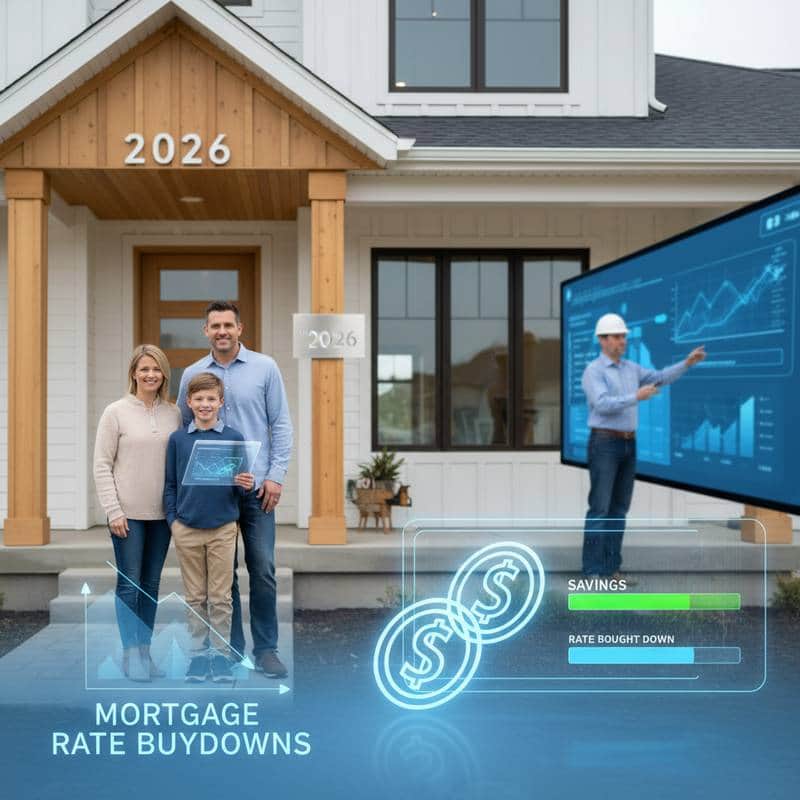
Builders in 2026 offer mortgage buydowns to lower early payments and help buyers move forward despite elevated rates. These incentives provide concrete monthly savings and restore confidence in new home purchases.
DSCR loans enable new construction financing based on projected property income rather than personal W2 earnings. This approach simplifies approvals for self-employed buyers and investors seeking flexible build options in 2026.
Starting in 2026, USDA loans permit solar panels within new home construction financing. This single-loan method simplifies funding, reduces interest expenses, and increases long-term home value. Builders and buyers gain streamlined access to renewable energy and lower utility costs.
DSCR loans let builders qualify based on property income instead of personal tax returns. This approach simplifies approval for self-employed investors and emphasizes cash flow over paperwork.
A 2-1 buydown temporarily lowers mortgage rates for the first two years. This builder supported option can save buyers up to 40000 dollars while easing the transition to homeownership.
Builders compete in 2026 through mortgage rate buydowns that lower early payments. Buyers gain from understanding costs, timing, and contract terms before selecting an offer.
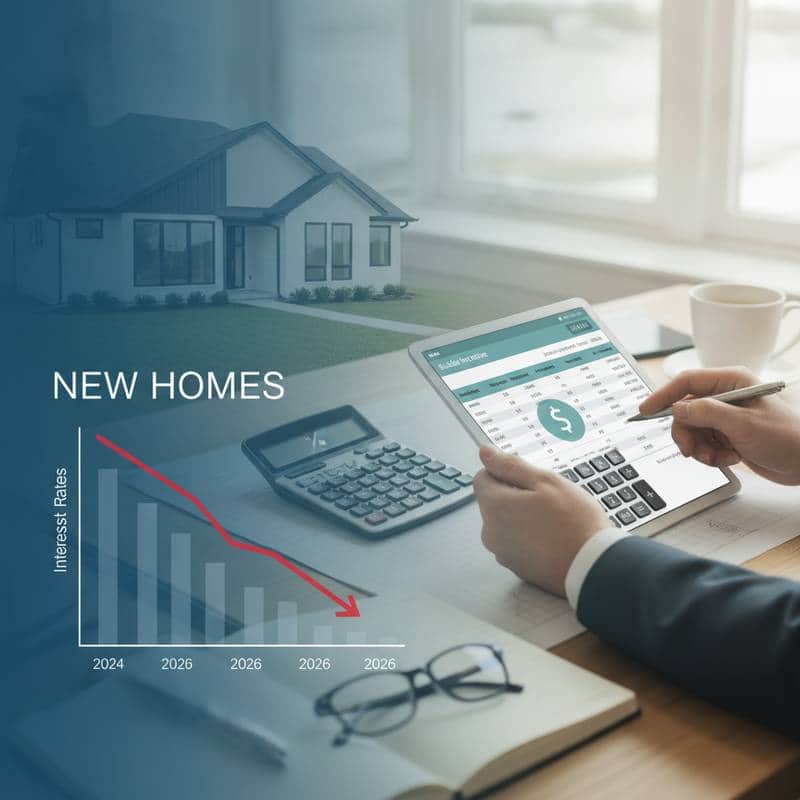
Builder rate buydowns lower mortgage rates on new construction homes through builder-funded payments to lenders. This overview covers temporary and permanent structures, qualification considerations, and practical steps to evaluate offers in 2026.
Builders are funding ten home projects without tax returns by using DSCR loans that evaluate property income potential. This approach simplifies qualification, supports phased construction, and rewards strong rental projections with flexible terms.
A 2-1 mortgage buydown lowers your interest rate for the first two years, easing early homeownership costs by as much as $40,000. Discover how builders fund this option, how payments adjust over time, and steps to secure long-term financial stability.
Builder paid mortgage buydowns temporarily lower interest rates and ease initial payments for new home buyers. Understand how these incentives function, the reasons builders offer them, and the steps required to avoid future payment surprises.
A construction-to-permanent loan merges construction financing and a mortgage into one streamlined agreement. Borrowers close once, lock terms early, and avoid managing multiple lenders during the build process.
Builder buydowns assist 2026 homebuyers in countering elevated mortgage rates through temporary payment reductions funded by builders. Structures such as 1-0, 2-1, or 3-2-1 buydowns reduce initial costs, improve affordability, and create potential refinancing paths, rendering desirable homes accessible while supporting builder sales in a challenging market.